01The problem
Your foundation has settled. Doors stick. Cracks appear at the corners of windows and door frames. The leveling guy says it'll come back. Six months later, it has.
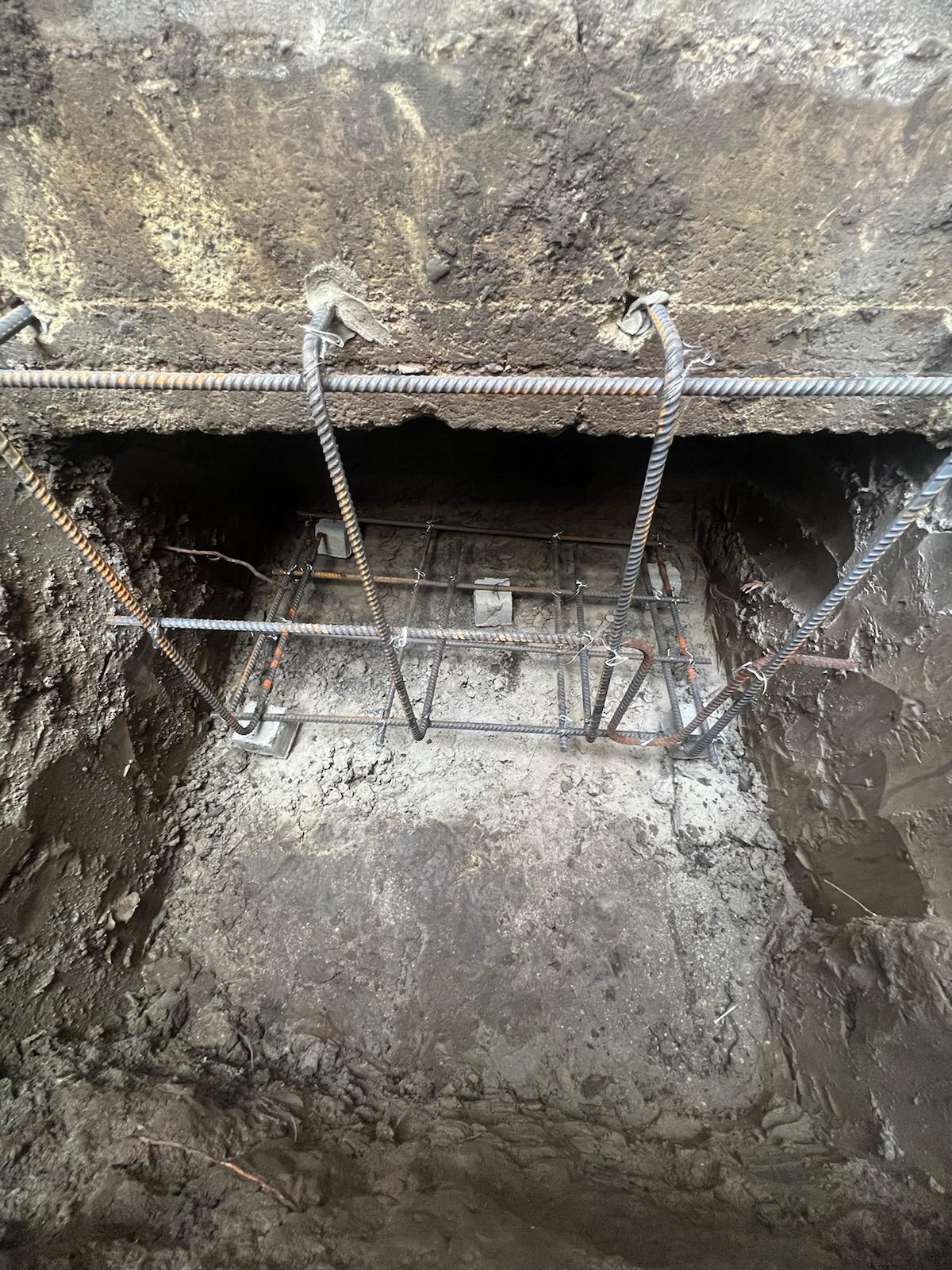
When leveling won't do it: pier-and-beam underpinning that gets to the load-bearing soil.
Your foundation has settled. Doors stick. Cracks appear at the corners of windows and door frames. The leveling guy says it'll come back. Six months later, it has.
Surface fixes don't reach the load-bearing soil. Mudjacking, jacking-and-shimming, even some pier systems leave the foundation supported by the same compromised soil that started the problem. The settlement returns — and now you've spent $15K and the buyer's inspector still flags it.
Underpinning gets to load-bearing strata and supports the foundation from below. We've done helical piers, push piers, and spread-footing reinforcement on Bay Area homes since 1998 — pre-code Edwardians, hillside cuts, soft-story conversions. Jose is on every job. CSLB #917675 (B · C-8).
You see the whole scope before any concrete is poured. Nothing hidden, nothing quietly billed mid-project.
The same rhythm whether the job is a $12,000 footing or a $200,000 structural retrofit. Owner on site, same crew, same standards.
Jose walks the home, identifies symptoms (door drag, crack patterns, sloping floors), measures elevations, and recommends whether underpinning is the right intervention vs. a lighter alternative.
A structural engineer designs the pier layout. If soil conditions are unknown, a geotechnical report informs depth and pier selection. We coordinate both so the bid lines up with the drawings.
Underpinning requires permits in every Bay Area jurisdiction we work in. We pull them and schedule the inspections.
Excavation pits dug at each pier location, or piers driven directly. Each pier installed to engineered load-bearing depth — not a guessed-at depth.
Every pier load-tested before transferring foundation weight. If any pier fails the test, it's redone. Then load is transferred from the soil to the piers.
Where drawings call for re-leveling, hydraulic jacking lifts the foundation to spec. Brackets locked. Pits backfilled. Cosmetic crack repair where structural movement existed.
We do underpinning regularly in the cities below — each with its own soil profile, code requirements, and site conditions. Click through for the local context.
Don’t see your question? Call (650) 754-3064 and ask Jose directly.
Leveling lifts the foundation back to its original position. Underpinning supports it on stable soil so it doesn't move again. They're often done together — but leveling alone, on the same compromised soil, is a temporary fix.
Most residential jobs run 5–15 working days, depending on pier count and access. Tight crawlspaces or hillside lots add time. Permit lead time can extend the calendar; we'll be specific in the bid.
Helical piers are screwed into the ground and handle lighter loads in tighter spaces. Push piers use the home's weight to drive piers to refusal — better for heavier homes and harder strata. The engineer's design dictates which based on soil and load. We don't push one for margin.
Usually no. Underpinning happens at the perimeter and underside; the inside is mostly undisturbed. If we're lifting, you'll hear hydraulic activity for a few hours per session. Doors and windows may need re-shimming after re-leveling — included in the bid.
Engineered underpinning, installed to load-bearing strata and load-tested, is the long-term fix for settlement. Bay Area soil doesn't get less compromised — but well-installed piers don't move. The system itself doesn't have a finite life when it's specified and installed correctly.
Sometimes — depends on cause. Settlement from undersized original construction is usually not covered. Settlement from a recent event (earthquake, broken pipe, drought-driven soil shift) sometimes is. Check with your carrier before signing the bid; we can provide documentation that supports a claim.
Free walk-through, written bid within 48 hours, no surprises. The same crew, the same owner — every project, since 1998.